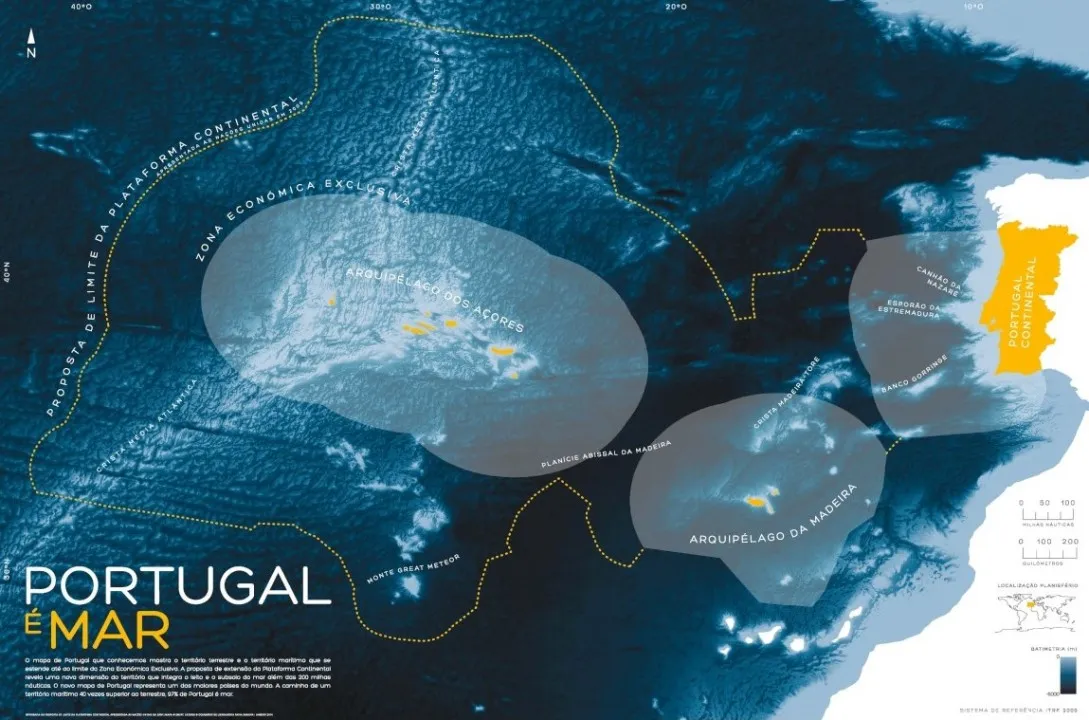
Fonte: Kit do Mar - Fichas Pré-Escolar e 1º Ciclo - DGRM
Portugal has forged an intimate relationship with the sea over centuries. From the Age of Discovery to the present day, the waters that bathe our coasts have been not only a source of inspiration but also of economic sustenance and strategic defense for the European continent.
The historical achievements of navigators such as Vasco da Gama and Ferdinand Magellan are perpetuated in the annals of history. But even today, Portuguese territorial waters shelter busy maritime routes, strategic ports, and precious natural resources. Fishing, commercial navigation, and coastal tourism are just some of the activities that sustain the economy and our national identity.
The Urgency of NAIS
It is in this context that the urgency of implementing a National Automatic Identification System (NAIS) in Portugal arises. NAIS is not just a technological tool; it is a vital instrument for safeguarding the lives of those who venture out to sea and protecting national interests in territorial waters.
By providing real-time data on the location and movement of vessels, a NAIS in Portugal would increase situational awareness and enable comprehensive knowledge of our waters. Moreover, by promoting information sharing between various entities such as port authorities, maritime traffic services, and national defense, NAIS would foster the cooperation and coordination necessary for effective maritime traffic management and incident prevention throughout Portugal’s maritime territory.
Open Data and Transparency
In line with the principles of transparency and accessibility, NAIS would be a public portal with free access to real-time and historical data, developed based on open-source software and accessible across multiple platforms, thus ensuring the democratization of Portugal’s maritime information to all and integrated according to the principles of the European Maritime Safety Agency (EMSA).
Although there are some national initiatives, whether by DGRM (Directorate-General for Natural Resources, Safety and Maritime Services) or by IH (Hydrographic Institute), they lack focus on AIS data issues and their opening to the public domain for everyone’s exploration. This increase in data accessibility and transparency is essential to enhance utilization and innovation for national maritime development.
A Maritime Legacy
In a country like Portugal, where the sea is inseparable from national identity, having a NAIS is more than a security measure; it is a commitment to the maritime legacy that shaped our history and will continue to play a fundamental role in our future.
By implementing a NAIS, Portugal not only strengthens its position as a prominent maritime nation but also ensures that future generations can face with knowledge the challenges posed by Portuguese waters.